
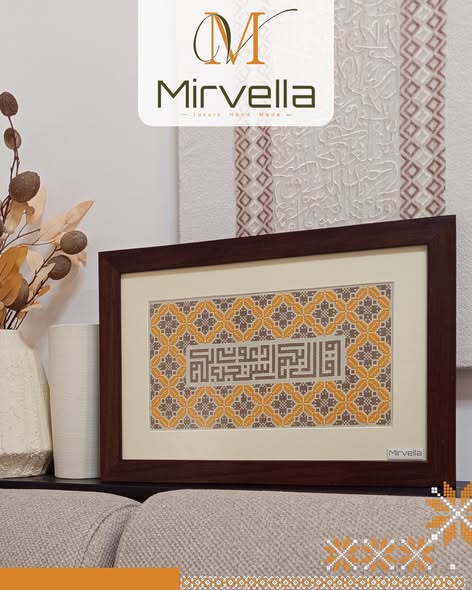
Decide where the eye begins
A focal point can come from position, contrast or scale. Imagine one dark flower among several lighter forms: it will probably attract attention before its neighbours. When every element asks for the same attention, the eye may have no clear starting place. In a finished piece, notice what you see first and whether the other elements support that first impression.
Repetition needs intervals
Repeating a shape creates rhythm, but the spaces between repetitions shape that rhythm too. Even intervals can feel steady; a cluster followed by a wider opening changes the pace. Rotation adds another possibility, turning one unit around a centre. You can test the arrangement mentally as plain blocks before concentrating on the finer detail inside each embroidered form.
Colour depends on its neighbours
A red line on a light ground reads differently from the same line surrounded by other strong colours. Contrast helps a silhouette remain clear; a narrower range of tones can direct attention toward texture and small differences. Consider the ground part of the palette. It occupies real visual space even where there are no stitches, and changes how much weight the coloured areas carry.
An opening can hold the pattern together
Open space is not necessarily an unfinished area. It can divide neighbouring forms, reveal a central crossing or give lettering room to be read. Imagine filling every pale gap in a dense pattern with colour. The picture would become heavier, and some outlines could disappear into each other. The gaps help define both individual shapes and the larger structure they form together.
The edge is part of the decision
The distance between the design and its frame gives the composition its final boundary. A broad surround may slow the transition to the room, while a close edge may make the pattern feel more concentrated. Compare the full rectangle with the cropped artwork. If their impressions differ, the frame is doing visible work and should be considered alongside the embroidered design.