
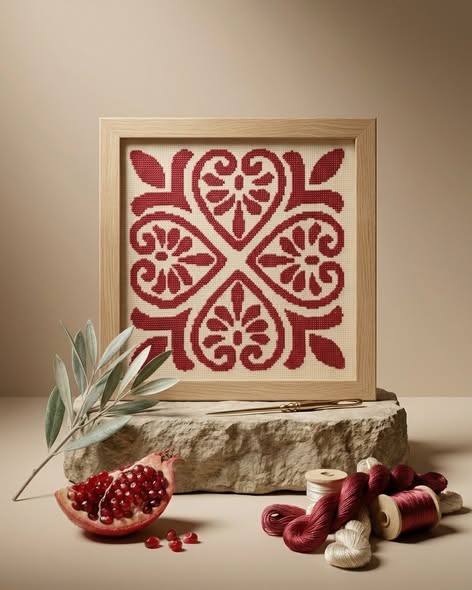
Thread makes the image
In embroidery, the image takes shape through stitches on a supporting surface. This gives the work a physical structure as well as a drawing. A floral curve, a block of lettering or a repeated geometric form can all be expressed this way. The fact that something is embroidered does not, by itself, identify its method of execution, materials or maker.
The frame changes how the work is encountered
A textile worn on the body moves with its wearer. Inside a frame, embroidery becomes a composition encountered from a particular distance and angle. Its edges and surrounding space are visible together. That shift can bring attention to rhythm, lettering and small details. It also means the outer frame belongs to the visual experience, rather than simply serving as packaging around the stitches.
One image can describe different objects
A stitched artwork, a printed reproduction and an embroidery kit can show the same design. They are different objects. A print carries a reproduced image; a kit is intended for someone to make the work; a finished embroidery already contains the stitches. Reading that distinction in a description is more reliable than deciding from a styled photograph alone.
A word and a living cultural practice
Tatreez is the Arabic word for embroidery and is commonly used in English for Palestinian embroidery. UNESCO inscribed the art of embroidery in Palestine on its Representative List in 2021. The listing concerns shared skills, knowledge and cultural practice. It does not certify an individual frame or establish the origin and meaning of every motif used in contemporary artwork.
Describe what you notice first
You can begin looking without knowing a motif’s name. Notice whether forms repeat, whether the ground remains visible and whether words lead the composition. A useful description might be red floral embroidery around an open centre, or angular lettering within a broad frame. Such observations help you explain your preference while leaving historical claims to sources that can support them.