
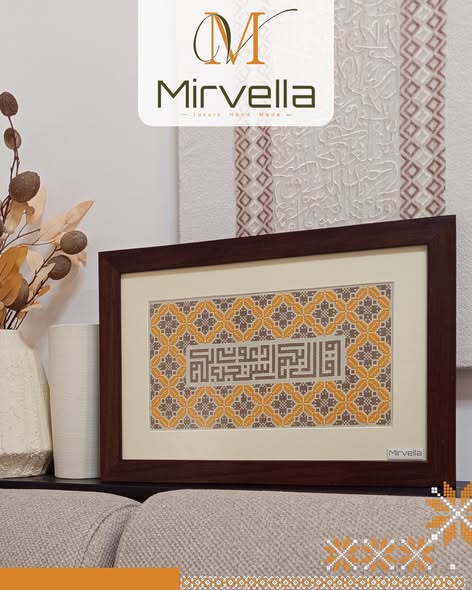
Begin with the job of the object
At an entrance, a mirror may serve a quick check before leaving. In a reading corner, a framed pattern may provide something to look at while resting. These are different uses even if both objects carry a decorative border. Think about who will use the corner and how they approach it. A mirror placed mainly for its appearance can be inconvenient to use, while artwork need not occupy the position that would suit a face-level reflection.
The reflection is part of the composition
A mirror repeats what stands opposite it: a window, a bookcase, a doorway or a busy shelf. Before choosing one, stand in the intended position and look at that view. Consider it with the door open and closed and with the usual lamps on. A decorative border around a crowded reflection may add more detail than you expected. Artwork holds its image still, which can be preferable where the rest of the room changes throughout the day.
Compare the useful centre with the outer edge
A wide decorated border leaves less reflective area within the same outer dimensions. For an artwork, the equivalent question is how much visible embroidery sits inside the frame and margin. Draw both outlines—the full object and its central area—when testing a size on the wall. Two objects with the same outer width can feel very different in use. If the mirror is functional, make sure its centre offers the view you need rather than choosing by the overall silhouette alone.
Plan the placement as well as the purchase
Consider nearby movement, moisture and direct contact with the surface. A decorative object near a wash area has different practical demands from one above a dry console. Obtain the actual weight, fittings and care guidance for the proposed object; the arrangements for one frame should not be assumed to suit a mirror. The final choice should make sense on an ordinary day, when the corner is being used, rather than only in a carefully arranged photograph.