
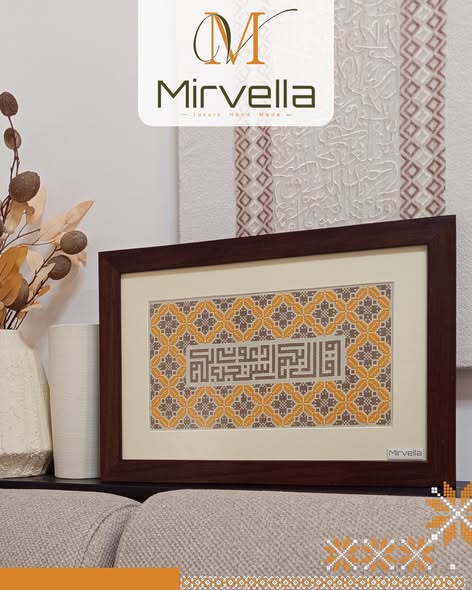
Give each offer the same description
Write a short line for each option: outer dimensions, visible artwork dimensions, execution method as described, frame and any covering. Add the wording if the piece includes lettering. This makes a meaningful comparison possible without reducing everything to price per centimetre. A larger frame can surround a smaller embroidered area; two similar-looking photographs can therefore represent quite different objects. An unspecified detail should remain a question rather than becoming an assumed advantage.
Distinguish the object from the requested changes
An existing composition and a request to alter its text or proportions are not the same offer. Note which changes have been discussed and which are included in the quotation. For example, changing a frame colour may be a different request from rearranging a long phrase. Neither has a universal price rule. What matters is knowing whether the amount describes the work you want, rather than an earlier version of the conversation.
Compare the total you would actually pay
Put delivery and other stated charges alongside the artwork price. If an amount is still unconfirmed, do not treat it as zero. For a destination abroad, establish which charges the seller’s total includes and which may require a separate check. Likewise, distinguish an estimated preparation period from an agreed date. A clear total and clear terms are more useful than a low opening figure with several unanswered details.
Use the budget to choose priorities
When an offer exceeds your budget, identify what you could change while keeping the reason you liked the work. Perhaps the text matters more than the outer size, or the composition matters more than a particular frame. Ask whether a suitable alternative exists rather than assuming that a cheaper version can be made. After that, reread the final offer as a whole. Your decision should fit both your finances and the place the artwork will have in your home.