
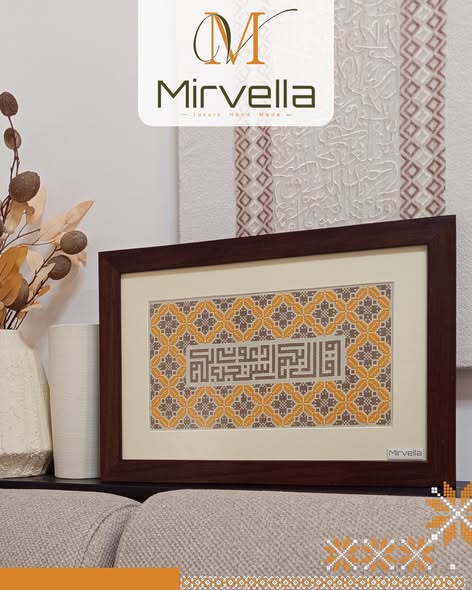
Design and execution are separate questions
A design may be drawn by a person and then stitched by machine. A hand-stitched piece may follow an existing pattern. Framing and assembly add other stages. When a description says handmade, establish whether it refers to embroidery, decoration or the finished object as a whole. This distinction is especially useful when comparing lettering: an original arrangement of words and the method used to stitch it are different qualities, and both can matter to a buyer.
What a close view can tell you
A close image can reveal how tightly an area is filled, how neighbouring shapes meet and whether an edge follows the intended line. It cannot reliably identify the production method. Consistency is not evidence against handwork, and irregularity is not evidence for it. Use close views to understand the visible surface, then use a clear account of the actual piece to establish how it was made.
Judge the result at two distances
From a normal viewing position, look for a legible composition and an intentional relationship with the frame. At a closer distance, consider the areas that hold your attention: a repeated border, a turn in a letter or a transition between colours. For example, a phrase may form an attractive block from afar yet need careful reading nearby. Evaluate whether both experiences suit its intended place, rather than making the label stand in for looking.
Decide why the method matters to you
Some buyers want to support time spent on a hand craft. Others begin with a particular pattern, a practical budget or a gift recipient’s taste. These priorities can coexist. A price does not authenticate a method, and neither method guarantees an artistic result. Make your priority explicit when comparing offers: ask about the stitching if handwork is central to the purchase, and still assess the full framed object on its own merits.